How to Play TERRITORIES
Controls, camp economy, towers, army growth, and General powers explained end to end.
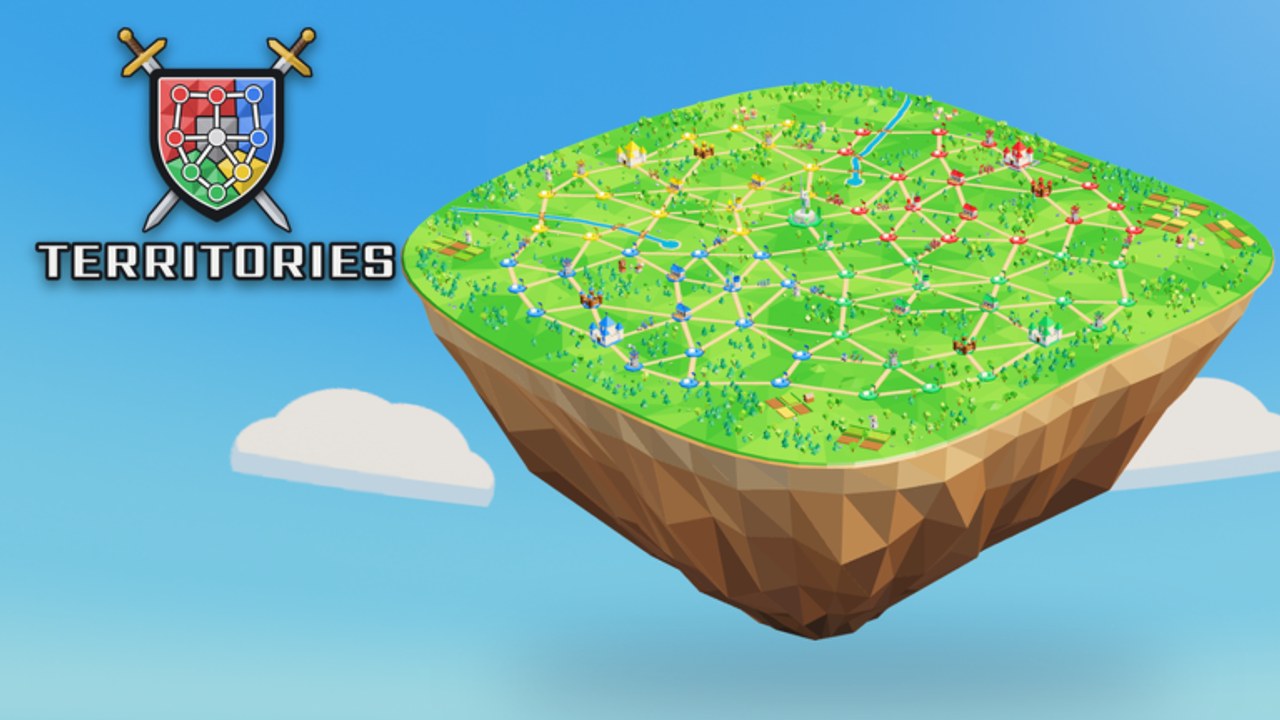
This is the systems deep dive for TERRITORIES on Roblox. If Getting Started is your checklist, this page is the rulebook: how input maps to action, how camps feed production, why towers matter, how armies snowball, and how Generals bend fights. Master these loops and every other mode—Casual, Ranked, Campaign, tournaments—becomes readable instead of chaotic.
TERRITORIES is a live RTS inspired by Risky Strats, built by ForeverDev under [Entropy] Games. Matches can hold up to 30 players. Your job is simple to say and hard to execute: capture camps, build towers, grow your army, and deploy a General whose power fits the board state.
Controls and camera habits
Learn the camera before you learn flashy attacks. Keep the map readable so you always see your home camps, the next expansion, and any army marching your way. Select your forces, issue move or attack orders toward camps or enemy stacks, and cancel bad paths early when a stronger army appears. On mobile, prioritize larger selection targets and avoid micro-flicking through dense fights; on PC, use deliberate camera pans so you never lose sight of a undefended camp while you raid.
Good players split attention: one eye on the active fight, one eye on income nodes. If your camera lives only where the biggest clash is, someone will snipe your empty camps behind you. Practice a rhythm—check home, check front, check flank—every few seconds.
The core loop: camps → towers → army → pressure
1. Capture camps. Neutral and enemy camps are your economy and spawn backbone. Capturing early clusters beats hunting glamorous mid-map brawls. Each secure camp increases your ability to replace losses. Losing a camp is not just a morale hit; it is a production cut that compounds every minute you stay behind.
2. Build towers. Towers fortify ground you already value. Place them to cover approaches, choke paths, and reinforce the camps that fund you. A tower on a worthless edge wastes resources; a tower covering two income camps can decide a mid-game hold. Details and composition notes live in Towers and Army.
3. Grow the army. Production without movement is a museum. Keep units flowing from camps, reinforce after every skirmish, and maintain a home garrison so a counter-raid does not erase your base. Army size is tempo: the player who rebuilds faster dictates when fights happen.
4. Apply pressure with a General. Generals bring unique powers that change timings—burst fights, defensive anchors, economy spikes, or map control tools. Pick one you understand, then specialize. Compare relative strength on the Tier List and practice the same General across Casual games until power timing is automatic.
Cycle those four steps constantly. Capture, secure, produce, push, reset. The players who break the loop—overfighting without camps, tower-building with no army, or ultimate-dumping with no follow-up—feed the leaderboard to everyone else.
Camp theory in practice
Think in clusters, not single dots. A triangle of camps that reinforce each other is stronger than a line of distant outposts. When you expand, leave a trail of connectivity so reinforcements arrive before a fight ends. If you take a far camp, either commit enough army to hold it or treat it as a temporary raid objective and bounce back.
Scouting matters. Send a small probe before a full commit so you do not donate your stack into a dug-in tower and General combo. After a win, immediately retake or reinforce the camp you just contested; after a loss, triage home income before you ego-rematch the same hill.
Tower placement rules of thumb
- Cover the approach your enemies actually use, not the scenic overlook.
- Support camps that already produce; do not decorate empty land.
- Combine tower fire with army presence—towers delay, armies finish.
- Rebuild or reposition mentally after the front moves; stale towers on abandoned ground are sunk costs.
For build order examples and army mix, continue in Towers and Army.
Army growth and fight selection
Never send one hundred percent of your force unless the match is ending. Keep a seed garrison. Trade when you have replacement income; refuse fights when you are income-starved even if the fight looks “fair.” Fair fights against a richer opponent are losses in slow motion.
Split forces when the map demands it: one stack contests, one stack guards. Merge when you need a decisive break. Watch for overkill—piling every unit into a dying camp while two other camps burn is a classic how-to-throw moment.
Generals: power with a plan
A General is not a skin. Learn what the power does, when it comes online, and what board state makes it strong. Aggressive Generals want early fights and stolen camps. Defensive or econ Generals want time and towers. Flex Generals punish misplays when you bait overextensions. Before Ranked climbs or tournament days, re-check the Tier List and lock a comfort pick rather than randomizing every queue.
Mode-specific notes
Casual — Experiment with camera habits, camp clusters, and General timings without ELO fear. Earn First Casual Win while you drill the loop. See Getting Started.
Ranked — Same loop, higher punishment. Ladder brackets around 1000 / 1200 / 1500 / 2000 ELO reward consistency. Read the Ranked Guide for queue mindset and the Beat the Commander badge path.
Campaign — Scripted bosses teach pattern recognition: Bluster Manor, Baron’s Locks, Bear’s Hall. Use the Campaign Walkthrough for chapter plans while you practice the same camp-tower-army fundamentals.
Tournaments — Compressed maps and bracket pressure. Prep with Tournaments, especially the weekly Saturday 11:00 AM EST merits event.
Practice drills that actually help
- Two-camp open: Capture two camps before any deep raid. Repeat until it feels boring.
- Reserve rule: Never leave home empty. Play ten Casual games enforcing a minimum garrison.
- Tower with purpose: Place only towers that cover an income camp approach.
- One General week: Main a single General across modes; swap only after you can explain its power timing out loud.
- Post-fight reset: After every clash, look home first, then expand.
Mistakes the loop exposes
Camera locked on one fight while camps fall. All-in pushes with zero rebuild plan. Towers before income. Ignoring Generals until Ranked. Learning only from losses without reviewing which loop step broke. Fix the step, not just the scoreboard.
Cross-links for mastery
Start orientation on Getting Started, deepen builds on Towers and Army, climb with the Ranked Guide, clear story content via the Campaign Walkthrough, schedule events with Tournaments, redeem live promos on Codes, and weigh Generals on the Tier List. The Guides Hub lists every tutorial if you need a map of the wiki.
How to play TERRITORIES is not a secret tech list—it is disciplined repetition of camps, towers, army, and Generals until your hands execute the loop while your brain plans two captures ahead.
Frequently Asked Questions
Quick answers for TERRITORIES commanders.
What is the core loop in TERRITORIES?
Capture camps for income and production, build towers to secure valued ground, grow and move your army, then use a General power to win decisive fights and expand again.
Should I build towers or capture more camps first?
Prioritize camps that fund production, then place towers that protect those income nodes. Towers without camps are expensive and easy to bypass.
How do Generals change how you play?
Each General adds a power that favors aggression, defense, or economy. Pick one style, learn its timing, and confirm strength on the Tier List before Ranked or tournaments.
Why do I keep losing fights with a big army?
You may be fighting without income, without tower support, or without a home reserve. Rebuild the loop—camps and garrisons—before taking the next highlight fight.
Where should I practice these systems?
Drill in Casual, then apply the same habits in Ranked, Campaign, and tournament brackets. Use Getting Started for the day-one path and Towers and Army for build detail.