TERRITORIES Map Tips
Read camp clusters, chokes, and multi-front pressure before you overextend.
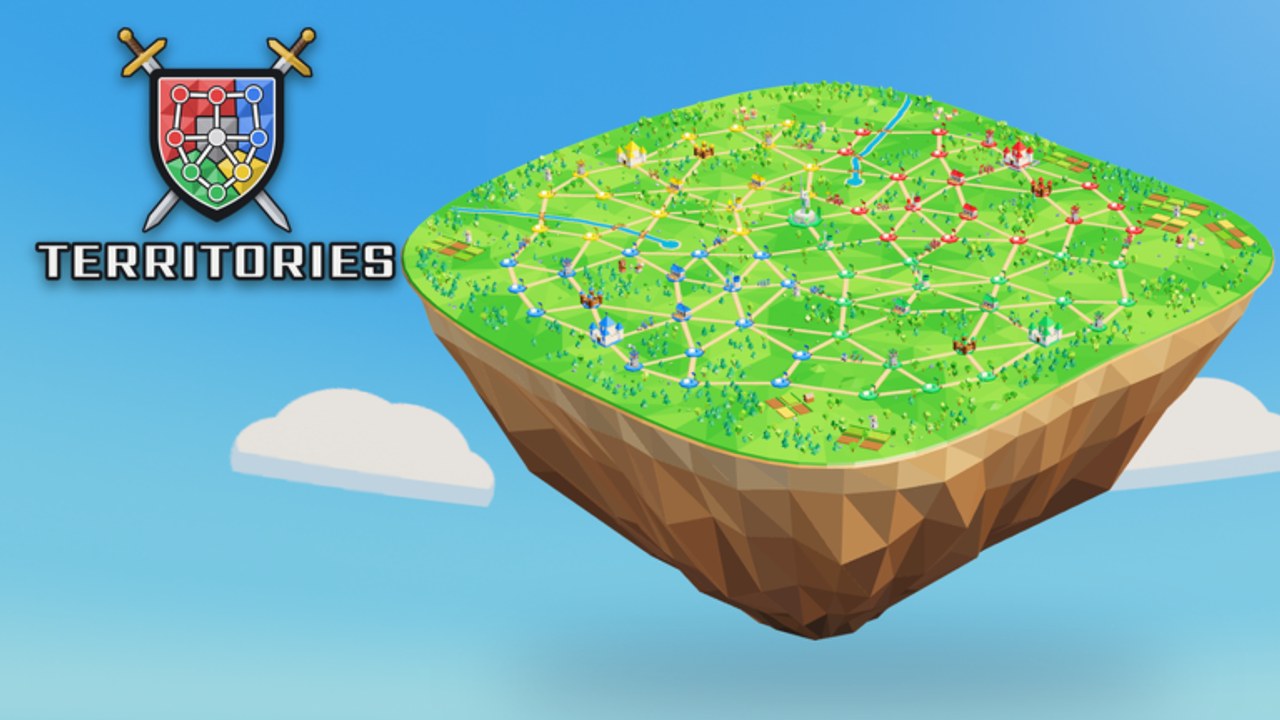
Thirty-player lobbies punish tunnel vision. TERRITORIES—the Roblox RTS by [Entropy] Games (ForeverDev / @d5vid_)—rewards commanders who read camp clusters, choke approaches, tower value, and spawn pressure while still growing an army and timing a General. This page is map awareness for Casual chaos, Ranked ladders, Campaign chapters, and tournament brackets. Pair it with Towers and Army for placement math and the Ranked Guide when every lost camp costs ELO.
Inspired by Risky Strats, the board is never “one fight.” It is a web of income nodes. Win the web, and the highlight fights come to you.
Think in camp clusters, not lonely dots
A single far camp looks tempting and dies alone. A tight cluster of two or three camps that reinforce each other survives raids and rebuilds faster. Open by securing a connected starter group near your spawn, then expand along paths your army can actually traverse before a fight ends.
Ask three questions every expansion:
- Can reinforcements arrive before I lose the contest?
- Does this camp touch income I already own, or is it an island?
- If I bounce, do I still have a home cluster producing?
Islands are raid objectives. Clusters are your economy. Confusing the two is how greedy players feed the lobby.
Choke approaches and where to tower
Towers belong on approaches enemies actually use—bridges, narrow entries, and paths that touch two income camps—not on scenic edges. A tower that covers a choke into your cluster turns a fair fight into a hold. A tower on abandoned ground is a sunk cost.
Practical placement rules:
- Cover the lane that already produced a raid on you once.
- Support camps that pay you; never decorate empty dirt.
- Combine tower fire with army presence. Towers delay; armies finish.
- Reassess after the front moves. Stale towers on dead ground lie to your brain about safety.
Deep composition and rebuild notes live in Towers and Army. Use this page to decide where the structure matters before you decide what to build.
Spawn pressure and early map shape
Spawns dictate the first ninety seconds. Players who ignore neighbors get pinched between two opener armies. Scout with a small probe toward adjacent camps before you commit your full stack. If two rivals collide near you, do not donate into their mess—secure your cluster, tower the threatened approach, and take the leftover camp after they trade.
Early pressure is information. A short probe that dies can still reveal tower lines and General identity. A blind all-in that dies reveals only that you were impatient.
Multi-front awareness in big lobbies
With up to 30 players, you will face more than one threat vector. Split attention on purpose:
- Contest stack — takes or defends the active objective.
- Home garrison — stops the snipe while you are busy.
- Optional third pulse — a small force that flips a neglected camp when two bigger armies collide elsewhere.
Never send one hundred percent of your army unless the match is ending. Fair-looking mid-map brawls against richer neighbors are slow losses. Trade when your cluster still produces; refuse when you are income-starved.
Camera rhythm from Controls matters here: home → front → flank → home. Map tips without camera habits are just theory.
When not to overextend
Overextension is the classic TERRITORIES throw. You win one camp deep, chase the survivor, and return to an empty base. Stop rules:
- No home reserve, no deep chase.
- No replacement income, no third fight.
- No vision of the next army, no commit through a choke.
- No tower cover on a valued camp, expect a re-raid.
Take the camp, leave a seed force or bounce home, then expand again. Temporary far camps are fine as raids; they are not invitations to live there without a plan.
If you feel tilted into greed, queue Casual and enforce a two-camp minimum before any deep push. Bring the same stop rules into Ranked after they feel boring.
Mode-specific map reads
Casual — Experiment with cluster shapes and tower chokes without ELO fear. Practice refusing bad deep chases.
Ranked — Same geography, higher punishment. Ladder checkpoints around 1000 / 1200 / 1500 / 2000 reward players who keep income while others chase. Read the Ranked Guide for queue discipline when map mistakes start costing badges and ELO pride.
Campaign — Boss arenas still teach approach control. Bluster Manor, Baron’s Locks, and Bear’s Hall punish greed the same way PvP does. Use the Campaign Walkthrough for chapter routes, then reuse the choke-and-reserve habits in live lobbies.
Tournaments — Compressed maps and bracket pressure amplify every overextend. Prep with Tournaments, especially auto arenas and the weekly Saturday 11:00 AM EST merits event, where one lost cluster can end a run.
Reading the board in ten seconds
When you glance at the map, prioritize:
- Your connected income count versus neighbors you can see
- Open chokes into your cluster
- Armies in motion toward your camps
- Neutral camps that link your cluster without islanding you
- Whether your General power is ready for the next conversion
If you cannot answer those quickly, zoom out. Micro without a board read is entertainment for your opponents.
Tower-and-army synergy on real ground
Map tips fail when towers and armies disagree. Place the tower where the army wants to hold. Stage the army where the tower already covers. After a win, immediately reinforce the camp you just took; after a loss, triage home income before ego-rematching the same hill. Generals plug into this sheet—aggressive powers want contested approaches, defensive powers want time behind tower lines. Confirm comfort picks on the Tier List once map habits are stable.
Drills for map awareness
- Cluster open: Capture a connected two-camp base before any deep raid. Ten games.
- Choke tower only: Place towers solely on approaches that already produced pressure.
- Probe first: Send a small scout before every full commit through fog or unknown ground.
- Two-front rule: Keep a garrison whenever a contest stack leaves home.
- Stop-watch chase: After a win, count to five while looking home before you chase.
Mistakes map-literate players still make
Knowing the theory and still chasing. Towering the wrong scenic hill. Ignoring spawn neighbors. Treating Campaign bosses as unrelated to PvP approaches. Showing up to Saturday brackets without a home-reserve rule. Fix the habit that dies on the map you already understand.
Cross-links
Build detail: Towers and Army. Ladder mindset: Ranked Guide. Boss geography: Campaign Walkthrough. Event maps: Tournaments. Inputs: Controls. Systems: How to Play. Hub map: Guides Hub.
Read the clusters, tower the real choke, respect spawn pressure, fight on two fronts without emptying home, and stop the chase before greed writes your defeat. That is map awareness in TERRITORIES.
Frequently Asked Questions
Quick answers for TERRITORIES commanders.
What is a camp cluster in TERRITORIES?
A connected group of camps that reinforce each other. Clusters rebuild faster and survive raids better than isolated far camps that look tempting but die alone.
Where should I place towers on the map?
On approaches enemies actually use—especially chokes that cover income camps. Skip scenic edges and abandoned ground that no longer matter.
How do I avoid overextending in 30-player lobbies?
Keep a home reserve, refuse deep chases without income, probe before full commits, and treat far camps as raids unless you can reinforce them in time.
Do Campaign maps teach useful PvP habits?
Yes. Chapters at Bluster Manor, Baron's Locks, and Bear's Hall punish greed and reward approach control you can reuse in Casual and Ranked.
How should I scout early after spawning?
Send a small probe toward neighboring camps before dumping your full army. Learn who contests your opener, then secure your cluster instead of donating into a three-way brawl.
Which guide pairs best with Map Tips?
Towers and Army for placement and composition, plus the Ranked Guide when map mistakes start costing ELO.